
Asphalt Crack Filling in Saskatoon Before Winter
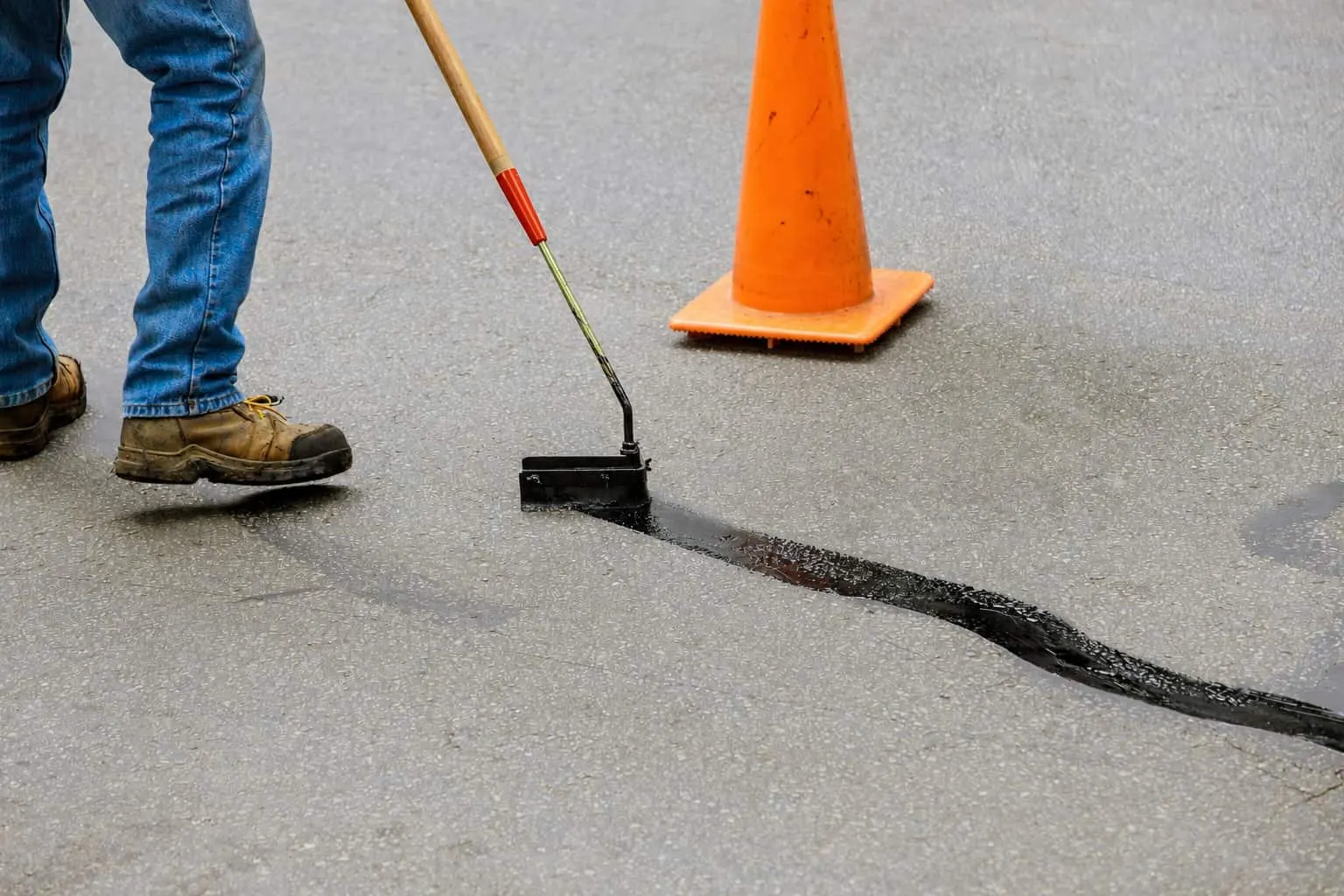
Asphalt crack filling in Saskatoon works best as a fall job. It seals narrow cracks so meltwater and rain can't get under the pavement and freeze. It does not fix a weak base or a surface that is already breaking apart. Our crack filling service is built around that difference, and knowing it will help you decide whether a repair is worth doing before snow.
What asphalt crack filling can and cannot do
Crack filling means cleaning out a crack and packing it with a hot or cold rubberized filler (a flexible sealant that stretches and shrinks with the pavement). Once the crack is sealed, water has a much harder time getting down into the base, which is the layer of compacted stone under the asphalt. Less water in the base means less swelling and heaving when the ground freezes.
What it cannot do is correct a base that has already failed. If the pavement sags, ruts or has cracks linked into a pattern like alligator skin, the problem sits below the surface. Filler on top of that is a short-term patch at best.
- Good fit: isolated, narrow to moderate cracks in pavement that is otherwise firm and flat.
- Poor fit: wide, crumbling cracks with broken edges, sunken areas, or cracks spread across a large section.
- Needs a different repair: potholes, which call for pothole repair rather than filler alone.
Check the crack and the surrounding pavement
Walk the driveway or lot slowly and look at the pavement beside each crack, not just the crack. Press on the edges with your boot. If pieces of asphalt flake off or the edge feels soft, filler will not grip well. Also look for loose stone, dirt and weeds packed into the crack, because all of it has to come out before sealing.
Note the pattern too. One long crack running across a drive is a different job from a dozen short cracks that meet each other. When cracks connect in a web, or the surface dips and holds water after rain, the damage is likely larger than a surface seal can handle. In that case ask for an assessment, because a section of asphalt paving may be the more honest answer.
A quick look-over list
- Mark each crack with chalk so you can describe it later.
- Check whether the edges are tight or crumbling.
- Look for low spots where water sits after rain.
- Note any cracks near drains, garage aprons or the street edge, where water tends to collect.
- Take note of whether the damage is in one area or spread over the whole surface.
Saskatchewan weather affects the work window
Saskatchewan winters bring snow and repeated freeze-thaw cycles, and that is the reason fall crack filling matters. Water slips into an open crack, freezes, expands, then melts and drains further in. Repeat that through a long winter and a hairline crack can turn into a wide one by spring.
The catch is that filler needs the right conditions to bond. The crack should be clean and dry, and the pavement and air temperature have to suit the product being used. Product labels differ, so a contractor will check the one on the truck. November weather does not always cooperate, since cold mornings, frost and early snow can shut the window on short notice. That is why waiting for a mild late-fall day is a gamble.
Saskatoon, Warman and Martensville
Property owners in Saskatoon, Warman and Martensville face the same general climate, but that does not mean the same timing fits every property. A shaded driveway that stays damp, a lot with poor drainage or a surface that holds snow melt can be wet when the next one is dry. If your pavement drains slowly or sits in shade, tell the contractor. It affects whether the cracks can be filled properly before the ground locks up.
| Condition | Effect on crack filling |
|---|---|
| Crack is wet or damp | Filler may not bond, so the work waits or the crack is dried first |
| Debris left in the crack | Weak bond, filler can pull out when the pavement moves |
| Frost on the surface | Often means the job cannot be done that day |
| Mild, dry day | Suits the work if the pavement itself is sound |
Choose a practical next step
Start by noting where your cracks are and whether the pavement around them is firm, loose or uneven. A few photos on your phone help. Then ask a paving contractor two things: does crack filling fit this kind of damage, and what weather conditions does the repair need before it can go ahead?
If you want us to look at it, we offer free quotes. Tell us where you are, whether it is a driveway or a lot, and what the cracks look like, and we will say plainly whether filling makes sense or whether something bigger is going on.
Common questions
When should I fill asphalt cracks before winter?
Fill them in a dry spell in fall, before frost and snow set in. The exact window depends on your weather and the filler used, so it can close earlier than you expect.
Does crack filling help limit winter asphalt damage?
It can help by keeping water out of narrow cracks, which reduces freeze-thaw damage. It will not stop damage coming from a weak base or widespread pavement failure.
Can I fill cracks myself?
Small cracks can be handled with a store-bought filler if they are clean and dry. Wide cracks, crumbling edges or lots of cracking are better assessed by a contractor first.
Areas we serve
Our services
Have a question about your project? Call (306) 668-8186